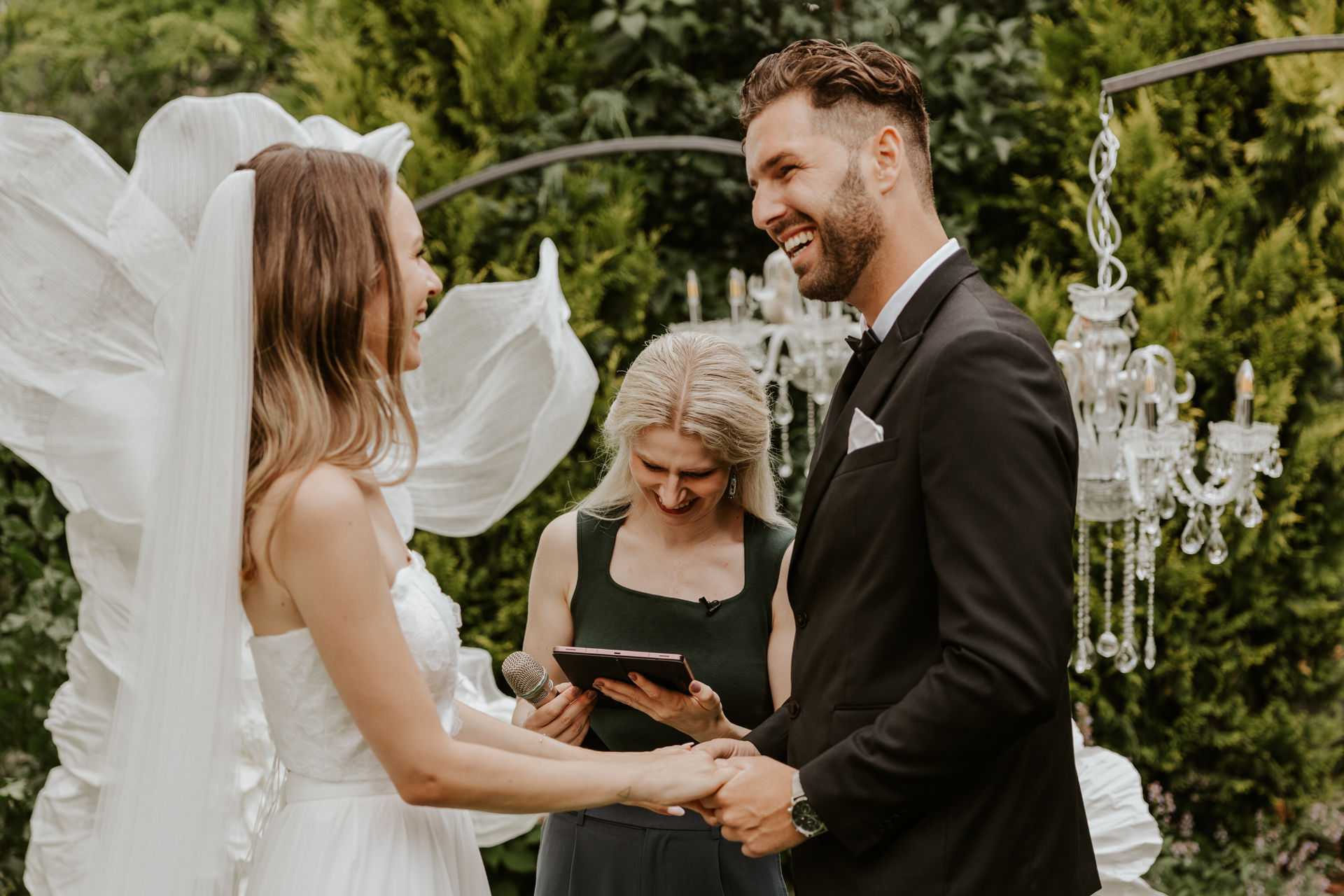
If a troubadour and a Wedding planners They work well together; you can see this especially in the way the ceremony is clearly structured and the process works without unnecessary friction. Both perform different tasks, However, they overlap in many places. In this post, I show how to, who is responsible for what, What should be decided in advance and how misunderstandings between the wedding planner and the wedding planning team can be avoided.
About the guest author
Evylin Schenk, a wedding coordinator, has been accompanying couples on their wedding since 2022. She creates bespoke free-form ceremonies and develops modern concepts that are tailored to the individual couple. She places special emphasis on personal advice, high-quality execution, and concepts that depart from standard kitsch. If you would like to learn more about Evylin and her work style, Click here to go to their website.
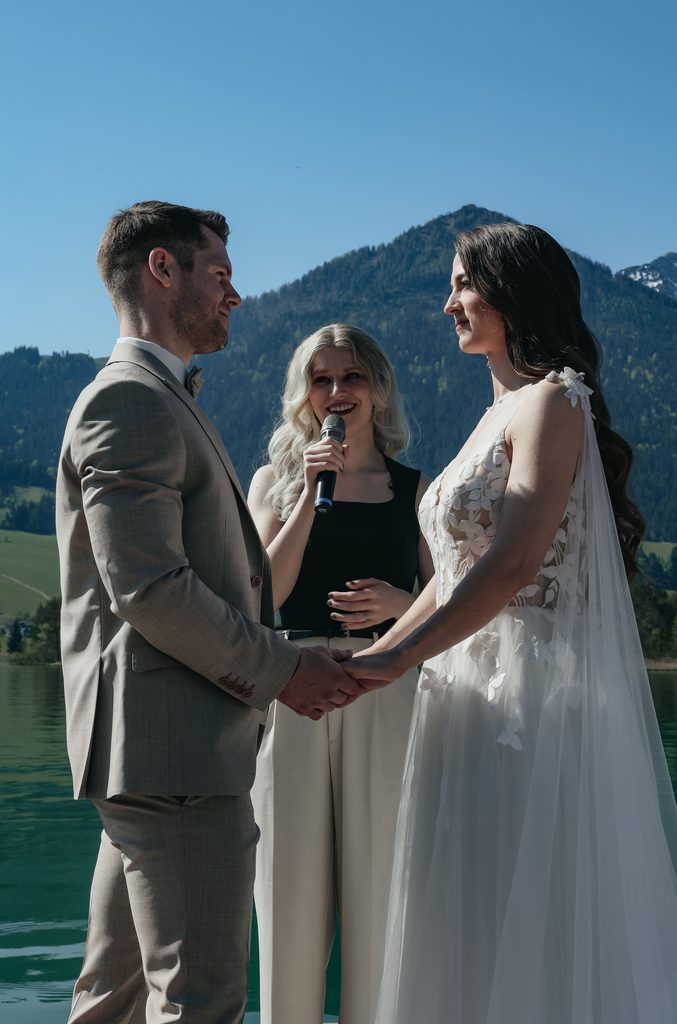

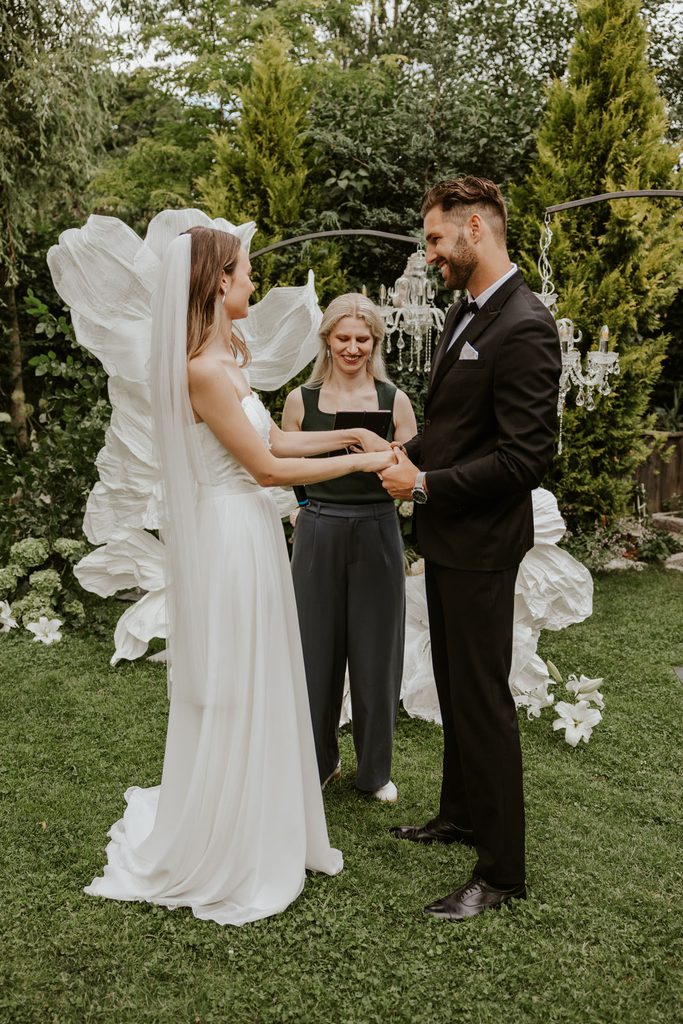
Wedding planners and wedding planners: How they work together to ensure a successful ceremony
Basic understanding: Two different areas of responsibility
Wedding planners and wedding planners work on the same day, but not on the same tasks. The wedding planner coordinates the entire wedding. He is responsible for times, services, routes, setup, and transitions. The wedding planner takes care of the free wedding ceremony as well. own part of the day. He develops the content and concepts of the ceremony, leads the proceedings and ensures that everything fits the couple.
Here it is important to know the difference between the organization, the speaker, and the wedding planner: The wedding planner knows when catering, music, photos, and guest movements need to be coordinated. The wedding coordinator plans exclusively everything that has to do with the free wedding: the greeting, the wedding speech, the marriage vows, the wedding rituals, and the exit. Both areas complement each other, but are not interchangeable.
This is also very helpful for you as a couple because you don’t have to expect a service provider to take on all the tasks. Good collaboration doesn’t mean that everyone has a say in every aspect of the wedding. It’s about each person knowing their area of responsibility and keeping the impact on the others in mind (after the motto: My dance area ~ Your dance area). Couples who work with an experienced wedding planner for the wedding will quickly notice how much structure and clarity clear responsibilities bring to the process.
Task distribution: Who is responsible for what?
The wedding planner keeps track of the overall concept of the wedding. This includes the time and budget plan, coordination with the wedding venue, coordination of service providers, seating arrangements, and other organizational changes on the day itself. If individual program elements change, he must assess the impact that will have on music, photos, the reception, or the dinner.
The officiant, on the other hand, is responsible for the content of the free wedding ceremony. responsible. This includes the consultation with the couple, the writing of the wedding speech, the planning and sequencing of the elements, e.g. contributions from family members, and the entire guidance during the ceremony.
It is also important to clarify what does not belong to the task. A wedding planner does not write a speech and does not decide which elements are included in the wedding ceremony. Conversely A coordinator should not independently take on the organization for the entire day. This clear demarcation is necessary to avoid conflicts.
Voting: What needs to be clarified?
For the collaboration to work, some clear Agreements required. First and foremost is the schedule. Not only the total duration of the free wedding ceremony is relevant here, but also the duration of individual ceremonies. Sections. Admission, greeting, speech, personal contributions, exchange of rings, rituals, and the exit all require realistic timeframes.
Just as important is the flow of events on the ground. Who gives the signal for the entry? Where is the couple waiting? Who informs the GuestsHow are microphone assignments handled during readings or speeches? When music is incorporated, it must be clear who coordinates the performances. Clear arrangements are also necessary in bad weather. Moving the microphone inside the room affects not only the chairs and equipment, but also the acoustics, setup, and other details.
What I have noticed as a wedding coordinator working with wedding planners: Sensitive points should also be specifically addressed. Topics such as multilingualism, limited mobility, family tensions, or cultural differences are relevant. At the same time, not everyone needs to know the most intimate details. For me, good collaboration does not mean revealing all the details or chatting about them, but establishing a meaningful flow of information.
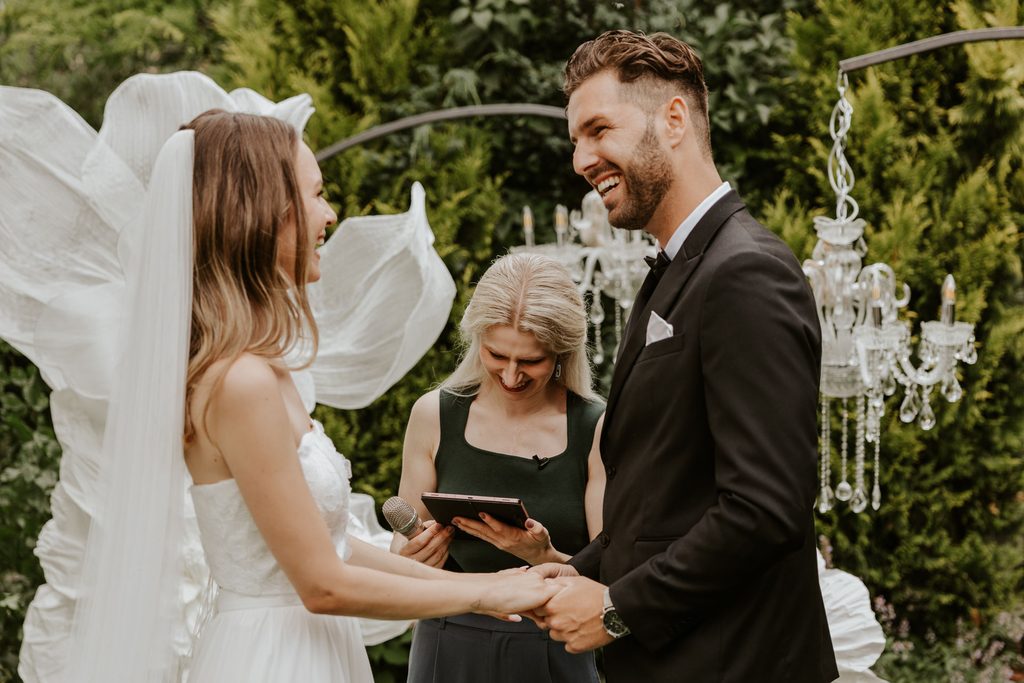
The role of the wedding coordinator in wedding planning
Contents of the wedding ceremony
As a wedding officiant, I have a clearly defined role in wedding planning. I am responsible for the start of your wedding, that is, the actual ceremony. A free ceremony is more than just a program item in the event. It requires a structured structure, a sort of guiding thread, and smooth transitions.
The duties of the speaker also include the Conversations with the couple, The selection of suitable elements and the decision on which contributions are to be integrated into the ceremony. If your parents, friends, or witnesses want to say something, the celebrant needs to know how to incorporate these elements without disrupting the flow of the ceremony (because sometimes Uncle Herbert really wants to say something on your wedding. And that then turns into a 30-minute speech). Rituals also require clear Embedding and must make sense in content terms.
Preparation and timing of the ceremony
During the preparation phase leading up to your wedding, the wedding coordinator provides the information that the wedding planner needs for the entire event. This includes, above all, the duration, wording, musical changes, and special requirements such as multilingualism among the guests. Conversely, the wedding coordinator in turn requires reliable details from the planner so that the wedding can be planned accordingly.
It is especially nice for me when we have already worked together. Here the communication channels are shorter and the transfers clearer because we already know each other and know what the other needs. What is crucial is that both act professionally, ask questions in a timely manner, and do not exceed their responsibilities. When you work with a wedding planner and an experienced wedding speaker, you benefit most when both clearly define their roles and still work closely together.
Frequently asked questions about a wedding coordinator and wedding planner
How is the collaboration between Trauredner and the wedding planner going?
The collaboration does not begin on the wedding day itself, but much earlier. The wedding planner organizes the framework of the wedding, coordinates wedding services, times, routes, and procedures. The wedding officiant is responsible for the free ceremony. He or she develops the ceremony, conducts the preliminary discussions with the couple, and creates a personal wedding speech and a clear ceremony flow.
In practice this means that both parties do not have to decide everything together, but the interfaces should be clearly defined. This includes the start of the wedding ceremony, the Duration of individual elements, The move-in, music, words of encouragement from family and friends, ritual ceremonies, and the transition after the move to the reception. Good collaboration means that the wedding planner knows what the celebrant needs for a successful ceremony and that the celebrant understands the impact even small changes can have on the day-to-day routine.
What information is important for collaboration?
Not all information needs to be shared with all parties involved. The details that directly affect the collaboration are especially important. These include:
- Start and planned duration of free marriage
- Process of the wedding, greeting, marriage vow, exchange of rings, ritual of the wedding and departure
- Musical pieces and their points of use (here you can also get the live musician on board)
- Planned speeches from family and friends
- Materials needed for ritual costumes
- Location, alternate location and weather forecast
- specific requirements such as multilingualism, accessibility, or special family situations
It is also important who passes on which information. The wedding coordinator must know, for example, whether spontaneous contributions are planned or whether the venue even changes. The wedding planner must be informed whether the ceremony will realistically last 30 or rather 45 minutes. Personal content from the wedding ceremony does not automatically belong in the general schedule. As a wedding officiant, I would never tell you about your most intimate matters. Confidentiality is part of professional work.
How is the time schedule coordinated?
The time planning works best when not only the total duration is mentioned, but the ceremony is divided into individual sections. A wedding officiant can usually estimate how long the greeting, the wedding speech, the wedding vows, the exchange of rings, or a ritual ceremony will take. The wedding planner then checks how this fits into the daily schedule and what effects shifts have on music, catering, photography, or the guests’ itineraries.
It is important that the wedding ceremony is not planned too closely. Many procedures appear short on paper, in reality, however, they require more time than that.. This applies especially to the ceremony and the reception. The wedding planner needs flexibility within the ceremony. The wedding planner needs reliable starting points. Both can be well combined.
What happens in the event of unexpected changes on the wedding day?
Unforeseen changes are part and parcel of many weddings. The weather can change, guests may not be present at the beginning of the ceremony, music may start late, or the schedule may change. Even if the wedding concept (and also the free ceremony) is meticulously planned, unexpected changes occur from time to time. For example: Once the bride’s father fell down just before the ceremony and was unable to walk anymore. What matters is not that everything runs exactly according to plan. In such cases, both service providers must react calmly and clearly. In such cases, the wedding planner usually takes on the organizational control. The celebrant adapts the ceremony as such when location, setup, or dynamics change.
When the ceremony is moved indoors, more things often need to be adjusted than just the location. Routes, acoustics, seating arrangements, and the entrance can change. The wedding planner coordinates the implementation. The officiant checks to see if he or she needs to adjust greetings, transitions, and introductions. The same is true for time delays. Then it is necessary to determine what can and must be shortened and what should not be changed at all because it is so important to the couple (for example, I would never have the wedding vows shortened!).
For you as the bride and groom, the most important thing is: Good collaboration isn’t shown by the fact that something unexpected never happens. It’s almost the opposite. If necessary changes can be easily integrated without causing new chaos, then everything has gone well. If the wedding officiant and wedding planner know their roles, the ceremony remains clearly structured and the wedding day as a whole remains stable.
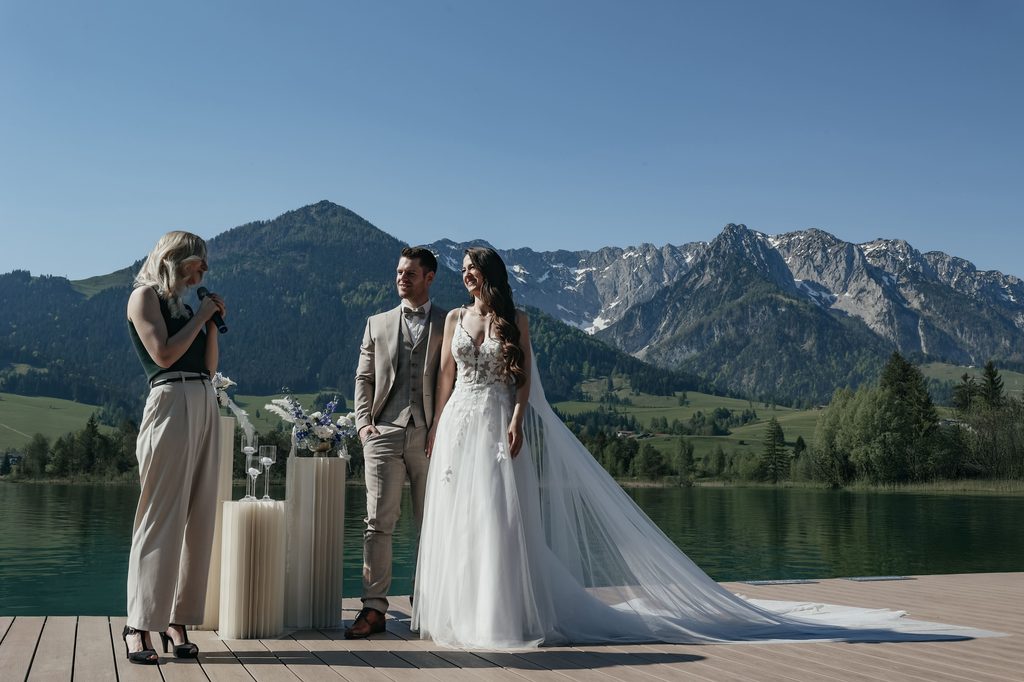
Conclusion: The perfect team for your wedding
Collaboration between the wedding coordinator and the wedding planner works well when both parties know their roles clearly and (important!) distinguish between them. The wedding planner controls the flow of the wedding, coordinating services, time slots, and transitions. The wedding coordinator is responsible for the content of the free wedding ceremony. Both are related, but they are not the same thing.
Misunderstandings arise only when organizational issues and content-related topics are mixed together. Who decides on the duration of the free wedding ceremony? Who talks with musicians, photographers, or the wedding venue? Who takes care of the speeches from friends and family? The clear answer is: The wedding planner coordinates the overall wedding system, the wedding officiant leads the ceremony.
Professional collaboration does not mean that both parties have to decide everything together. What is relevant here is that the most important information is available to the right person at the right time. The wedding coordinator needs to know how much time is realistically available, whether there are special procedures for the entrance ceremony, whether a change of location is necessary, etc. The wedding planner needs information about the organization of the free ceremony, time-intensive elements, and possible sensitive matters.
It is very important for me to say: No service provider should take on the role of the other. A wedding coordinator should not have to spontaneously change the entire day’s schedule just because something spontaneously changes within the ceremony. A wedding planner should not interfere with the wedding speech just because a time frame gets tight. Good collaboration does not mean control, but respect for the respective expertise.